

Advice
Do you need a chimney liner for a new stove?
We include a suitable chimney liner when installing a wood-burning or multi-fuel stove into an existing masonry chimney. Here is what we assess and specify.
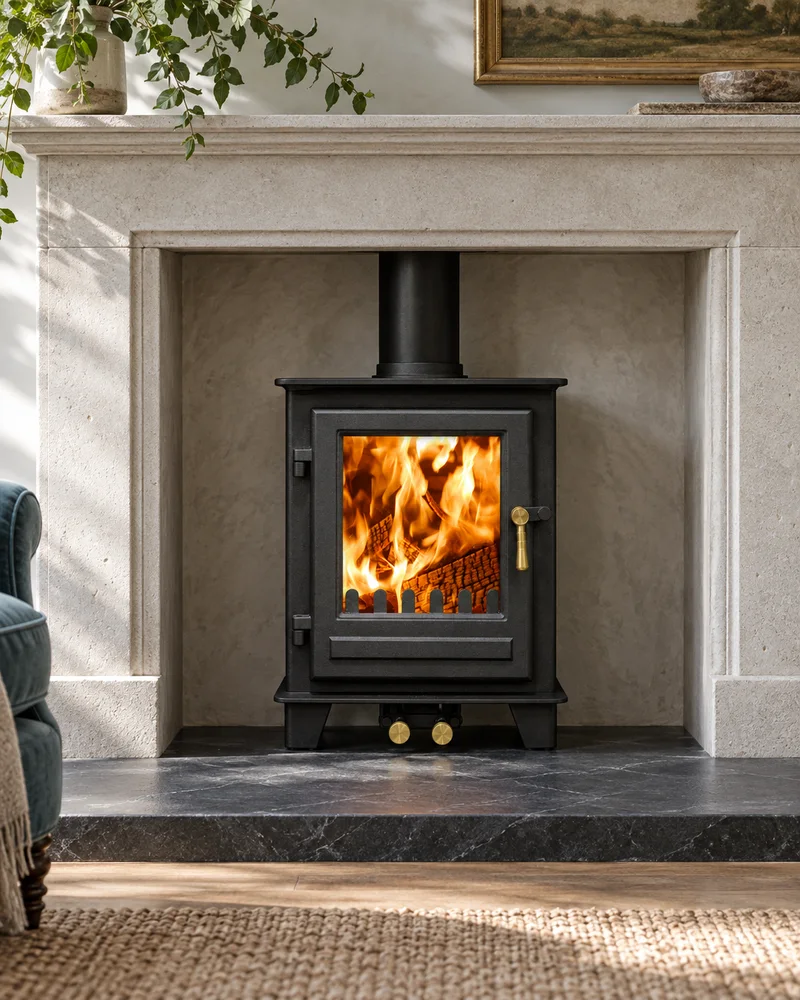
Yes: when we install a wood-burning or multi-fuel stove into an existing masonry chimney, our policy is to include a suitable chimney liner. We plan the stove and flue together, with a defined route for combustion products and a specification matched to the appliance and your home.
A survey establishes the chimney’s condition and the liner, connections and terminal needed. If your home has no suitable masonry chimney, we assess a purpose-built insulated flue system instead. The installation still needs a complete, suitable flue; the type of system changes with the property.
What a chimney liner does
The chimney or flue must carry combustion products safely to the outside and support suitable appliance performance. A liner creates the internal passage within the existing chimney. Depending on the design, that may be a flexible stainless-steel liner, a rigid system or another suitable lining method.
For a stove project, the liner must be compatible with the fuel, appliance, temperature and operating conditions. Its diameter, product designation, connections, termination and installation method are parts of one specification. Choosing only by a material label or a price per metre leaves important questions unanswered.
Why we include a liner
Our approach is to give the new stove a continuous, suitable passage through the existing chimney. The aim is to carry combustion products safely outside and support the conditions the appliance needs to work efficiently. The assessment covers:
- the condition and dimensions of the existing chimney;
- the flue size and arrangement required by the chosen stove;
- deposits, leaks or obstructions that need attention before installation;
- compatible connections, support and termination;
- any insulation specified to help maintain flue temperature;
- access for sweeping, inspection and maintenance.
Managing flue temperature helps reduce condensation risk. Suitable termination and sound weathering also matter when keeping rainwater out. A liner alone cannot prevent every damp problem: damaged masonry, flashing or chimney-top details need their own repairs. Correct fuel, operation and maintenance remain important after installation.
What should be checked first
HETAS and BFCMA guidance says an existing chimney should be swept and its condition assessed before reuse. The appropriate checks can vary. They may include reviewing its history, inspecting accessible parts and carrying out relevant tests. A camera inspection can be useful in some cases, but it should not be presented as mandatory for every project.
Useful evidence for the first conversation includes photographs of:
- the fireplace opening and chimney breast;
- the chimney stack and pots;
- all accessible outside elevations;
- loft or roof-space sections that can be seen safely;
- signs of staining, debris, previous openings or alterations.
Also mention the age of the property, the last known use, previous lining work and any repairs. Photographs help triage the enquiry but cannot reveal every concealed condition.
A liner does not repair the chimney structure
This distinction matters. BFCMA guidance explains that a flexible liner takes the shape of the chimney and does not add structural strength. If the stack, masonry, joints or surrounding construction are weak, the required repair must be considered separately.
That is why chimney lining and chimney repairs are separate planning topics even when they form part of one stove project. The quotation should say which condition issues are known, which remain hidden and how additional work would be handled.
Liner size is not a guess
The visible stove outlet does not by itself determine the complete liner specification. Approved Document J, the appliance instructions and the chimney-system instructions all need to be considered. Fuel, appliance type, chimney height and route also matter.
Avoid accepting a universal diameter rule copied from a forum or another installation. Ask the person specifying the system to identify the exact appliance, liner product, designation, diameter and connection method in writing.
Flexible liners are for existing chimneys
A flexible stainless-steel liner is intended to be installed within a suitable masonry chimney, not used as an exposed substitute for a chimney through a room or up an outside wall. Schiedel’s installation guidance states that its flexible liner must be completely enclosed inside a masonry chimney.
Where a property has no usable existing chimney, the alternative may be a tested insulated system chimney. Read can a stove be installed without a chimney? and what a twin-wall flue involves for that route.
316L and 904L do not answer the whole question
Flexible stainless-steel products are commonly available in different grades, including 316L and 904L. The grade affects material properties, but the correct selection depends on the complete product designation, fuel, operating conditions, manufacturer requirements, maintenance and warranty terms.
Do not reduce the choice to “cheap” and “premium” or assume one grade is always required for one fuel. The 316 versus 904 chimney-liner guide sets out the questions worth asking without pretending the material name is the complete specification.
What a clear quotation should identify
Before agreeing lining work, ask for clarity on:
- which liner and complete flue arrangement are specified for this chimney and appliance;
- what assessment and preparation are included;
- the manufacturer, product, grade, designation and diameter;
- the adaptors, supports, top termination and weathering method;
- whether insulation or other surrounding work is specified;
- roof access, scaffolding and making-good responsibilities;
- what happens if concealed defects are found;
- commissioning, notification and handover records;
- sweeping, inspection and guarantee conditions after installation.
This turns a generic “liner included” allowance into a system you can understand and compare.
Plan the stove and liner together
For our installations into existing masonry chimneys, lining is included in the plan. The survey determines the appropriate system and any preparation or repair work. Bring the chimney into the conversation early, before committing to a stove on appearance alone, so the quotation covers the whole installation.
Start with the installation journey or send external and internal views through the photo survey. The final answer still depends on an appropriate property assessment.
Sources checked
General guidance checked on 16 September 2026 against:
- GOV.UK: Approved Document J for combustion appliances and chimneys
- HETAS and BFCMA: guidance on existing chimneys and relining
- BFCMA: maintenance and inspection of existing chimneys
- Schiedel: flexible-liner design and installation guidance
The exact product, dimensions and installation method must be confirmed for the selected appliance and property. This page does not replace a chimney assessment or the manufacturer’s installation instructions.
Continue planning
Related buyer guides
What to expect from a stove installation
Follow the usual decisions from first showroom conversation to property assessment, written scope, installation and handover.
02316L versus 904L chimney liners
Compare the two stainless-steel grades without losing sight of product designation, fuel, operating conditions, installation and warranty terms.
03Can you install a stove without an existing chimney?
See how an insulated system chimney may create a route for a stove and which room, building and external details must be assessed first.
A simple first step
Ask about your room
Tell us what you have in mind. The showroom team will be in touch shortly.
Prefer to talk? Call 01625 402900.