

Advice
How to choose the right stove output for a room
Understand nominal stove output, room heat demand and the property details that matter before choosing a kW rating.
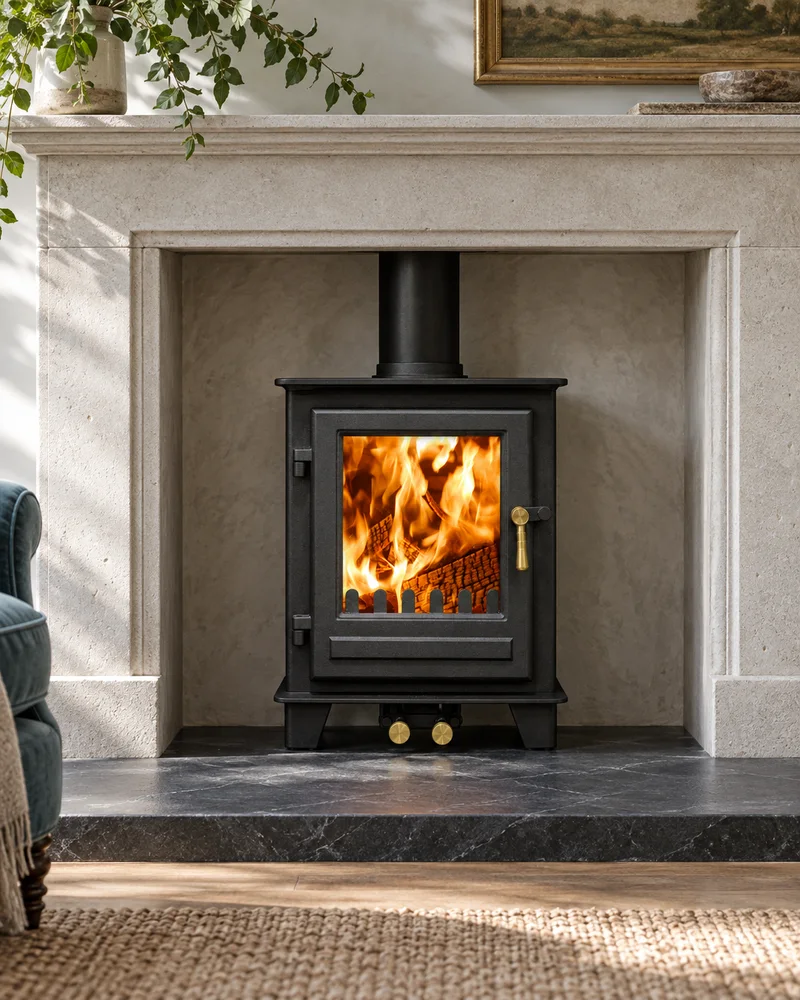
The right stove output is the one that matches the room’s realistic heat demand and can be used as the manufacturer intended. Bigger is not automatically better. An oversized stove can make a room uncomfortable and tempt people to run a solid-fuel appliance too low. An undersized appliance may struggle to deliver the warmth expected from it.
Room dimensions are useful, but they are only the start. Insulation, glazing, draughts, ceiling height, open doorways and the way the room connects to the rest of the house can change the result. This is why an online kW formula should create a first conversation, not a final specification.
What the kW figure means
Appliance output is expressed in kilowatts. Product information will often show a nominal output and may also show an operating range. The nominal figure is a standardised performance point used to compare products; it is not a promise that every room will feel the same with that appliance.
Two stoves carrying the same nominal output can also feel different in use because of their design, control range, fuel, installation and the way heat moves through the room. Compare the technical data for the exact model rather than choosing on a large “5 kW” or “8 kW” label alone.
Measure the room properly
Bring the basic dimensions even if they are approximate:
- length and width of the room;
- ceiling height, including any vaulted or double-height section;
- the size and position of the fireplace or intended stove location;
- large openings into halls, kitchens, conservatories or adjoining rooms;
- unusually large areas of glazing or external wall.
For an open-plan space, do not measure only the seating area around the stove. Warm air can move into the connected volume, so the full layout matters. Photographs from each corner often explain the space better than a single number.
Record what changes the heat demand
The same size room can need very different amounts of heat. Useful details include:
- Age and construction: solid walls, modern cavities and extensions can perform differently.
- Insulation: loft, wall and floor insulation affect how quickly heat escapes.
- Windows and doors: size, glazing type, condition and draughts all matter.
- Exposure: external walls, sheltered positions and exposed elevations change heat loss.
- Existing heating: decide whether the stove will supplement central heating or is expected to do more of the work.
- How the room is used: a space used for an hour in the evening has a different pattern from an all-day living room.
Recent improvements are worth mentioning. New glazing, insulation or an opened-up floor plan can make old assumptions about the room inaccurate.
Why a quick volume formula has limits
Many stove calculators divide room volume by a fixed number to suggest a heat output. That can be a useful screening tool, but the divisor changes according to assumptions about insulation and exposure. It does not inspect the property, assess the chimney or account for how the stove will actually be used.
A calculator can help you decide whether to look around a lower or higher output range. It should not be used to approve an installation, set ventilation requirements or override the appliance instructions. HETAS advises that installations should follow Building Regulations and the manufacturer’s instructions, with an installer assessing the specific situation.
Avoid choosing “extra power just in case”
An oversized solid-fuel stove can heat the room too quickly. The natural response is to add less fuel or close the air controls for long periods. That may move the appliance away from the operating conditions for which it was designed and can reduce combustion quality.
Instead, ask:
- what is the nominal output and useful operating range?
- how does the chosen fuel affect the rated performance?
- how controllable is the model at the lower end of its range?
- will the room be comfortable during milder weather as well as cold evenings?
- is another part of the home expected to receive heat through open doors?
This creates a better shortlist than selecting the largest appliance that fits the fireplace.
Output is only one part of suitability
A stove can be close to the expected heat requirement and still be wrong for the proposed installation. The complete check includes:
- appliance dimensions and required clearances;
- hearth and fireplace construction;
- chimney condition, flue size and proposed route;
- combustion air and room ventilation;
- local smoke-control requirements;
- fuel type and the manufacturer’s permitted fuels;
- access for operation, sweeping and servicing.
Approved Document J covers the air supply, discharge of combustion products and protection of the building for combustion appliances in England. Those installation questions need to be resolved for the exact property rather than inferred from room size.
What to bring when discussing output
You do not need a survey drawing. A useful first pack is:
- photographs of the whole room and the intended position;
- room length, width and height;
- fireplace opening and chimney-breast measurements, if present;
- notes on insulation, windows and open-plan connections;
- the type of heating already used in the room;
- your expected use, from occasional evenings to regular heating;
- any models or styles you already like.
The showroom can use this to identify sensible models to compare. A photo survey provides a structured way to send the same information when you cannot bring everything with you.
How to compare the shortlist in the showroom
Once the likely output band is understood, look beyond the number:
- Does the stove physically suit the fireplace and room?
- Is the flame view and door size right for the setting?
- Are the controls clear and comfortable to use?
- What fuel load and operating pattern does the manual describe?
- Does the appliance have the certification needed for your location and intended fuel?
- What chimney, flue, hearth and ventilation work would the model require?
Then connect the model choice to the installation journey. The most useful answer is not simply “you need 5 kW”; it is a model and installation route that make sense together.
Sources checked
General guidance checked on 16 September 2026 against:
- HETAS: finding a registered installer and property-specific advice
- HETAS: product search and nominal-output information
- Planning Portal: Approved Document J overview
- GOV.UK: Approved Document J 2022 amendments
This guide helps prepare a useful discussion. Final appliance sizing and installation requirements depend on the property, the selected model and a competent assessment.
Continue planning
Related buyer guides
Choosing fireplace chambers and hearths
Plan the opening, chamber lining, hearth material and proportions around the fire or stove, with the technical specification checked for the exact appliance.
02Wood-burning, multi-fuel, gas or electric: how to choose
Compare the flame, control, fuel, room and installation questions that separate wood-burning, multi-fuel, gas and electric fires.
03Questions to ask before buying a fire or stove
Use this practical checklist to compare appliances, installation routes, running requirements and the finished fireplace before you commit.
A simple first step
Ask about your room
Tell us what you have in mind. The showroom team will be in touch shortly.
Prefer to talk? Call 01625 402900.