

Advice
Gas versus electric fires for an existing fireplace
Compare flame, heat, chimney, gas, electrical and building-work questions before choosing a new fire for an existing opening.
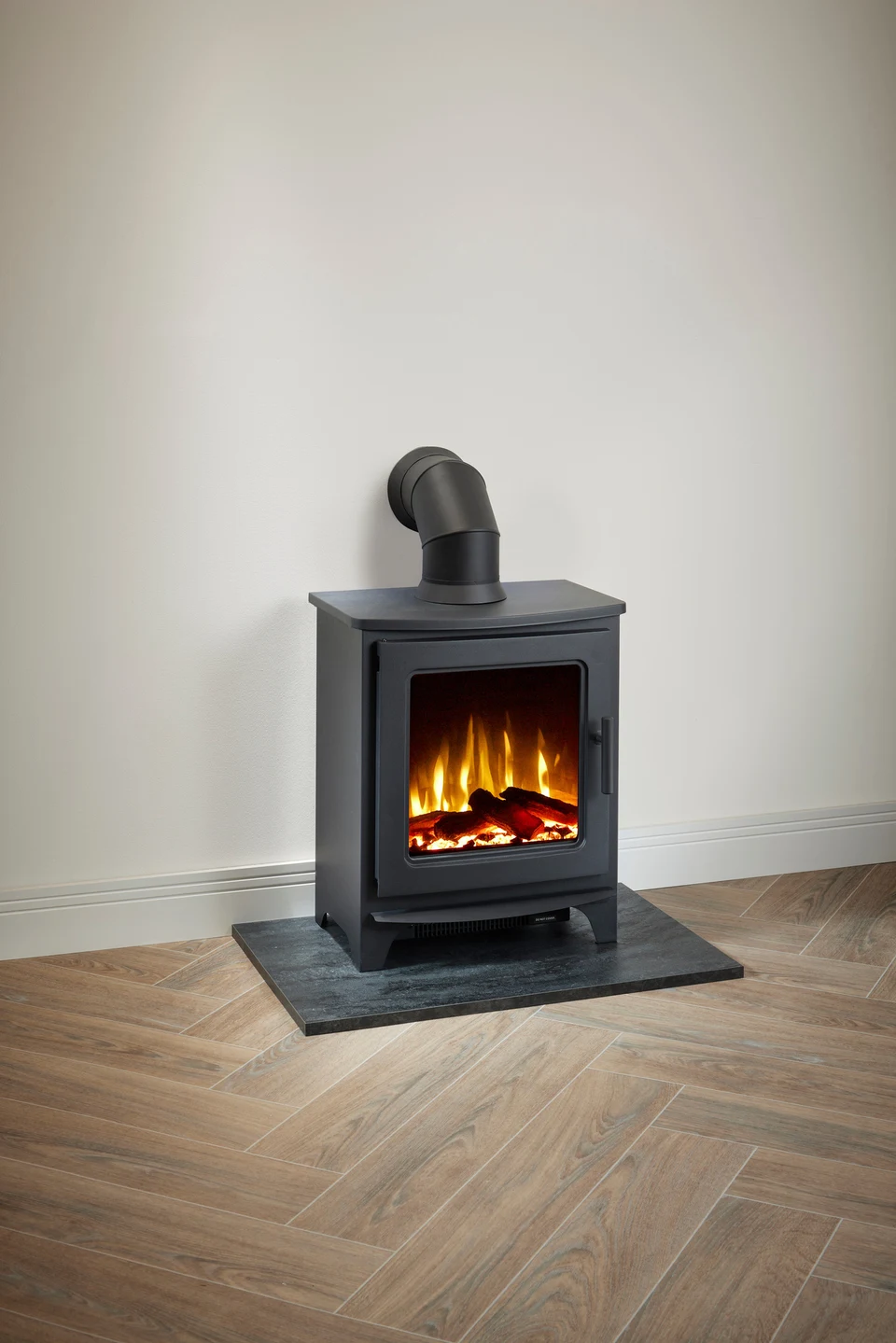
An existing fireplace can appear to make the choice simple: remove the old fire and fit another one in the opening. In practice, the visible opening is only one part of the decision. A gas fire depends on the gas supply, appliance type, ventilation and a suitable flue arrangement. An electric fire depends on power, airflow, fixing and the dimensions needed for the chosen effect.
The right comparison begins with how you want the room to feel and function, then tests each option against the property.
The quick comparison
| Question | Gas fire | Electric fire |
|---|---|---|
| Flame | A real gas flame on suitable models | A visual flame effect created by the appliance |
| Heat | Model-specific gas input and useful heat output | Usually a separate electric heater on applicable models |
| Existing chimney | May be usable only after the appliance and flue arrangement are assessed | A working chimney is not normally needed, but the opening and void still need a suitable build |
| Supply | Requires a suitable gas supply and legal gas work | Requires a suitable electrical supply and provision |
| Installation | Gas Safe registered engineer with the correct work category | Model instructions, sound support and appropriate electrical work |
| Flame without heat | Depends on the model | Common on many current models, but must be checked |
| Main appeal | Real flame and controllable heat | Flexible positioning, varied visual formats and simpler fuel handling |
This table is a starting point. Running costs, output, efficiency, controls and installation work differ between exact models and properties.
When gas may suit the room
Gas can suit homeowners who value a real flame, quick control and useful heat without storing solid fuel. Traditional inset fires can work with a classic surround, while contemporary built-in models can create a wider feature.
The existing chimney does not automatically make the property gas-ready. The proposed appliance may require a particular flue type, terminal, ventilation arrangement and gas supply. An old flue or chimney that served a previous fire must be assessed for the new appliance rather than assumed suitable.
All work on gas fittings must be carried out legally by a Gas Safe registered business. The engineer’s ID card shows the categories of work for which that person is qualified, including gas fires where applicable. Ask to see the card and check both its expiry date and the relevant category.
The gas fires and stoves range and gas fire installation page provide the next routes for a gas enquiry. Send the property details so the showroom can confirm the current installation scope and coverage for the project.
When electric may suit the room
Electric fires can suit homes where a working chimney or gas supply is absent, where flame effect is wanted without burning fuel, or where a broader visual format fits the room. Many current models separate the flame display from the heater, allowing the effect to be used without heat. Check that function on the exact product.
An existing fireplace can house an inset electric fire, a freestanding electric stove or a purpose-made suite, depending on its dimensions and condition. The unused chimney or recess may still need appropriate closure, ventilation or making good. The fire must have the airflow, support, power and access specified by its manufacturer.
Electric does not mean that every model can simply be placed in any opening. Measure body depth, visible dimensions, glass and trim sizes, heater outlet position, cable route and how the appliance will be removed for service. If the opening will be altered or reduced, draw the final composition with the surround and hearth before work starts.
Explore the electric fires and stoves range and electric installation page for relevant formats.
Inspect the existing fireplace as a system
Before choosing either fuel, record what is already there:
- the full opening width, height and depth;
- the chimney breast and, where present, outside stack;
- the old appliance, controls, flue connection and ventilation;
- the gas-meter and supply position if gas is being considered;
- socket, circuit and cable-route options for electric;
- hearth, chamber, slips and surround materials;
- signs of staining, damp, cracking or previous alterations;
- the floor level and any planned decoration or flooring work.
Do not conceal an unexplained defect behind a new appliance. A stain, damaged terminal or loose section of surround may need investigation before the replacement is specified.
Compare the flame and controls in person
Product imagery cannot show flame movement, glass reflections, fan noise, control response or how bright an electric effect appears in daylight. View shortlisted models operating where possible.
For gas, compare the flame at different settings and ask how the controls, pilot or ignition operate on that model. For electric, compare the flame bed, lighting, sound if included, heater noise and whether the effect and heater can be controlled separately. Check remote-control functions and what happens if the handset is lost or its batteries fail.
The Macclesfield showroom is useful because the decision can move from a web shortlist to a real comparison of scale, finish and operation.
Include the surrounding building work
The appliance price is only one part of the project. A fair comparison should account for the work needed to make the existing fireplace suitable.
For gas, this could include assessment of the supply and flue arrangement, removal of the old appliance, changes to the opening or hearth, ventilation and making good. For electric, it could include a new electrical provision, framing or closing the opening, support, decorative panels and access for future removal.
The chamber and hearth guide helps organise those visible and construction choices. Ask for the quotation to state what happens to the old appliance and which finishing work is included.
Questions to take to the showroom
- Do I want a real flame, a visual effect or mainly useful heat?
- How often will the fire operate, and will the flame be used without heat?
- Which exact models fit the opening and room proportions?
- What does the property assessment need to confirm?
- Is the existing chimney or flue relevant and suitable for the proposed gas appliance?
- What gas or electrical work is required?
- Which chamber, hearth or surround changes are included?
- How will the fire be accessed for servicing or repair?
- What controls, guarantees and maintenance apply to the exact model?
Bring photographs of the fireplace, chimney breast and outside elevation, plus rough opening dimensions and the old appliance details. This is enough to begin a useful comparison without assuming the final installation solution.
Sources checked
General guidance checked on 16 September 2026 against:
- HSE: Gas Safe Register and engineer work categories
- GOV.UK: registration required to carry out gas work
- GOV.UK: Approved Document J for solid fuel, gas and oil combustion installations
- Velisse Fires: examples of current electric-fire formats and controls
This guide supports comparison, not a remote installation decision. Gas work requires a Gas Safe registered engineer qualified for the relevant category, and both gas and electric choices must be checked against the exact appliance, fireplace and property.
Continue planning
Related buyer guides
Choosing limestone, marble or timber fireplace mantels
Compare the character, variation, care and practical design questions behind natural stone and timber fireplace surrounds.
02Choosing fireplace chambers and hearths
Plan the opening, chamber lining, hearth material and proportions around the fire or stove, with the technical specification checked for the exact appliance.
03Preparing for a stove and fire showroom visit
Bring the photographs, measurements and property details that turn a showroom visit into a useful shortlist for your home.
A simple first step
Ask about your room
Tell us what you have in mind. The showroom team will be in touch shortly.
Prefer to talk? Call 01625 402900.