

Advice
Choosing an electric fire for a media wall
Plan the fire, television, viewing format, ventilation, access and build sequence before the media-wall structure is closed.
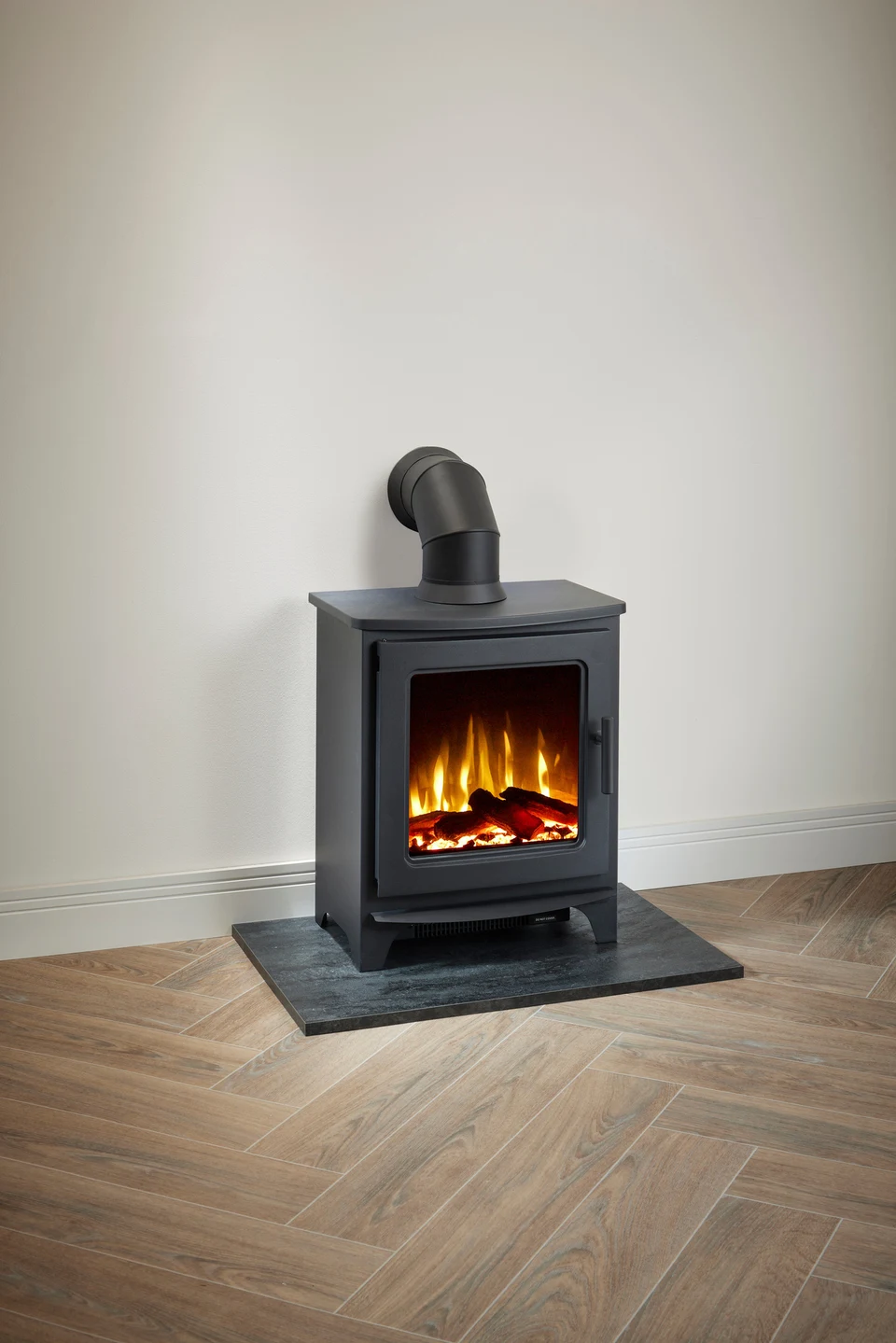
An electric fire can make a media wall feel designed around the room rather than assembled from a television, shelves and a separate heater. The best results begin with the exact appliance and a measured elevation. Choosing the fire after the structure has been framed can create awkward proportions, blocked ventilation or no practical way to install and service it.
Electric fires vary in size, depth, viewing format, heat outlet, controls and installation method. Treat product photographs as inspiration, then build the specification from the current manual for the exact model.
Begin with the viewing format
Many inset electric fires can be presented as front-facing, corner or three-sided displays. The format changes the wall depth, opening and how the fire is seen from different seats.
- Front-facing works well when the wall is viewed mainly from one direction and a calm, flush composition is wanted.
- Corner format can open one side of the flame picture towards an adjoining part of the room.
- Three-sided makes the fire more prominent and can suit a wall that is visible from several angles.
Confirm which blanking panels, trims or glass arrangements are included for each option. A model family may support several formats, but the dimensions and construction details still need to match the selected size and edition.
Set the proportions with the television
Start with the television’s actual width and height, not only its advertised diagonal size. Then place the fire beneath it on a dimensioned drawing. British Fires recommends beginning with the TV size and deciding whether the fire will be viewed on one, two or three sides.
Check the composition from the normal seating position. A fire wider than the television can create a strong low line. A closer width match feels more contained. Neither is universally correct, but the offsets should look intentional.
Also consider:
- the television centre height and comfortable viewing angle;
- the visible gap between television and fire;
- the height of the flame picture, not just the appliance casing;
- the width and depth of shelves or cupboards;
- soundbar position and remote-control sight lines;
- skirting, doors, radiators and furniture around the wall.
Do not use a generic spacing rule between the fire and television. The required arrangement depends on the fire’s heat outlet, airflow path and installation instructions, as well as the television and wall design.
Decide whether heat matters
Some electric fires allow the flame effect to operate without heat, while their heater offers separate settings or thermostatic control. That can make the visual effect useful through more of the year. Features and outputs differ by model, so check the exact product rather than assuming every electric fire behaves the same way.
Velisse, for example, currently describes multiple inset, suite and media-wall formats with flame-only operation, heater settings and timer or energy-management functions across its range. Those details make a useful comparison point, but the selected model’s manual and specification remain the source for the project.
Ask whether the fire is intended mainly for atmosphere, supplementary heat or both. This affects positioning, airflow and expectations. An electric feature fire should not be treated as a substitute for a room heat-loss assessment where primary heating is being planned.
Plan the wall around ventilation and access
The appliance needs its designed air path. Heater inlets, outlets and ventilation openings must not be blocked by plasterboard, decorative trims, shelves or stored items. The structure also needs to support the fire, television and any other fixed equipment.
Manufacturer instructions can include model-specific framing dimensions, clearances and fixing points. One British Fires inset manual states that plasterboard alone is not a structural fixing and that the wall must support the appliance. This is a useful reminder to resolve framing and supports before boarding, while still following the manual for the exact fire chosen.
Plan future access too. Consider how the appliance, glass, fuel bed, lights, heater and controls can be reached if maintenance is required. A perfectly flush finish is less successful if routine access requires destructive work.
Coordinate the electrical provision
The electrical supply, isolation, cable route and any concealed connections should be planned with a competent electrician and the appliance instructions. Avoid running power or low-voltage cables where heat or fixings could affect them. Keep television, soundbar, network and lighting cables organised and accessible.
Check whether the fire is supplied with a plug, whether that plug must remain accessible and whether the proposed circuit and socket position are suitable. Do not hide extension leads or multiway adaptors inside the finished wall as a design solution.
The electric fire installation page provides the commercial route, while the electric fire and stove range helps compare formats.
Get the fire on site before final boarding
British Fires advises having the fire on site before starting a media-wall build because part of an inset appliance can be concealed behind the finished wall. This is sensible project sequencing even when a drawing is available.
Before closing the structure:
- Verify the exact model and edition delivered.
- Check the appliance for transport damage.
- Compare its dimensions with the current manual and framed opening.
- Confirm the intended front, corner or three-sided configuration.
- Check supports, fixings, power and cable routes.
- Keep all required ventilation openings clear.
- Test the controls, flame effect and heater as instructed.
- Retain a practical route for service and removal.
This sequence reduces the risk of building accurately around the wrong drawing or a different model variant.
Design details that make the wall feel complete
Keep the number of materials controlled. A simple wall can gain depth from one contrasting finish, recessed shelves or restrained lighting. Too many textures, colours and LED lines can compete with both the flame picture and the television.
Think about the wall when the screens are off. The fire bed, logs, glass and internal lighting will remain visible, so compare them in person where possible. Mirror glass can increase the sense of depth, while darker rear glass can reduce reflections and place more emphasis on the fuel bed. These are product-specific options, not universal features.
Browse the Velisse Fires range and discuss other suitable displays through the media-wall fires page. Bring the television model, room photographs, wall dimensions and a rough sketch to the Macclesfield showroom.
Sources checked
General guidance checked on 16 September 2026 against:
- British Fires: New Forest 1900 media-wall fire and installation sequence
- British Fires: New Forest 2400 and media-wall sizing approach
- British Fires: Ashlett Insert installation manual
- Velisse Fires: current electric-fire range
This guide supports early planning. The exact opening, structure, ventilation, electrical work, clearances and service access must follow the selected appliance instructions and the people responsible for the finished wall.
Continue planning
Related buyer guides
Gas versus electric fires for an existing fireplace
Compare flame, heat, chimney, gas, electrical and building-work questions before choosing a new fire for an existing opening.
02Choosing limestone, marble or timber fireplace mantels
Compare the character, variation, care and practical design questions behind natural stone and timber fireplace surrounds.
03Choosing fireplace chambers and hearths
Plan the opening, chamber lining, hearth material and proportions around the fire or stove, with the technical specification checked for the exact appliance.
A simple first step
Ask about your room
Tell us what you have in mind. The showroom team will be in touch shortly.
Prefer to talk? Call 01625 402900.