

Advice
Stove servicing, chimney sweeping and maintenance
Understand the different jobs involved in cleaning the flue, servicing the appliance and looking after a stove between professional visits.
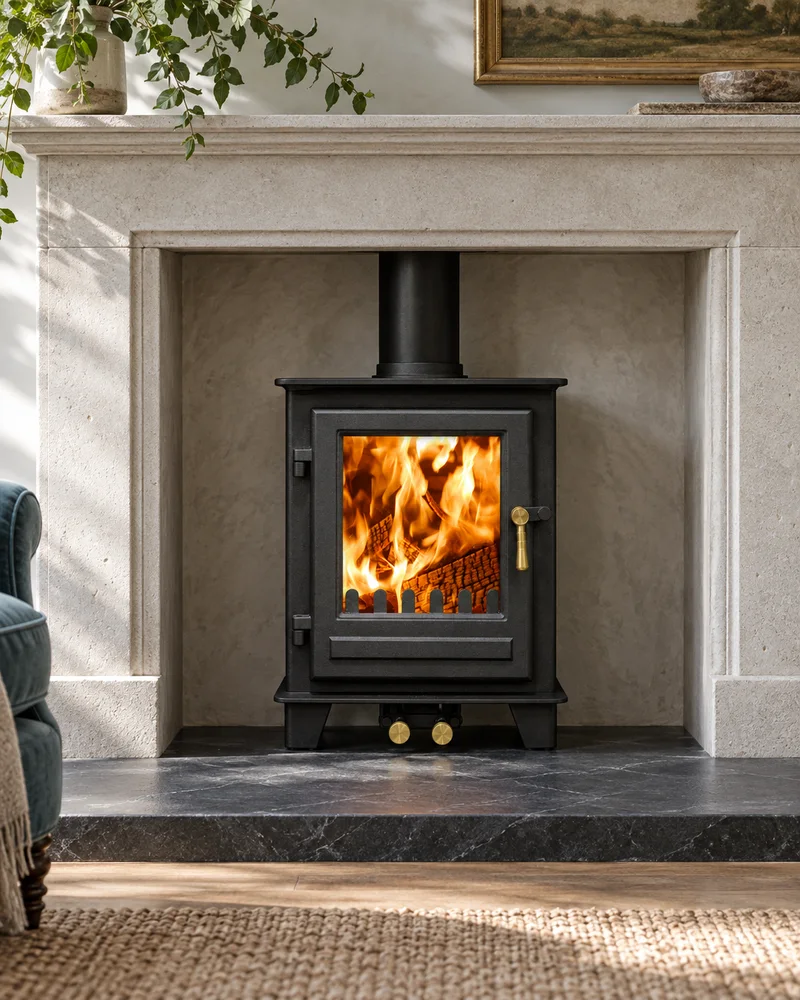
Chimney sweeping, stove servicing and routine maintenance are related, but they are not interchangeable. Sweeping focuses on clearing the chimney or flue. Servicing focuses on the appliance and its components. Routine care covers the smaller checks and cleaning a homeowner carries out in line with the stove instructions.
Keeping these jobs separate makes it easier to book the right person, understand what has been checked and retain useful records for the installation.
What a chimney sweep does
A professional sweep removes soot, deposits and obstructions from the chimney or flue using equipment suitable for its type, size and lining. The aim is to leave a clear route for combustion products and to identify anything encountered during the visit that needs attention.
The HETAS approved sweep code describes a complete sweep as passing suitable equipment through the full length of the chimney or flue, removing loose and obstructing deposits, protecting the room and checking that the flue provides adequate draw. It also requires the user to be advised if the installation is not left in a suitable condition for continued operation.
A normal sweep is not the same as a structural survey or repair. If damage, unusual deposits, poor condition or an obstruction is suspected, further investigation may be recommended. Camera inspection and specialist testing are separate competences and should be agreed explicitly rather than assumed to be part of every visit.
What a stove service covers
A stove service concentrates on the appliance. The exact work should follow its manufacturer instructions and condition, but it may involve cleaning internal passages, checking seals, firebricks or liners, baffles, grate parts, controls, glass and other components subject to wear.
Parts should not be replaced simply because a generic checklist says so. Some wear is expected, while cracks, distortion, failed seals or damaged components need to be assessed in context. Use parts specified for the exact model and keep receipts or service records where a warranty asks for them.
Servicing also gives an opportunity to discuss changes in operation, such as difficulty lighting, persistent smoke, reduced control, unusual noise or damage. It does not remove the need to sweep the chimney or flue unless the booked scope specifically includes both jobs.
The stove servicing and maintenance page and chimney sweeping page are kept as separate routes so the showroom can confirm the current scope for each enquiry.
Routine homeowner maintenance
The appliance manual should guide day-to-day care. Typical tasks can include removing ash safely, cleaning the glass by an approved method, keeping air inlets clear and checking visible seals or internal parts for change. Carry them out only when the appliance is cold and follow the instructions for ash, cleaning products and component removal.
Routine care does not include altering the stove, dismantling a flue connection or continuing to use damaged equipment. If smoke enters the room, a carbon-monoxide alarm activates, a chimney fire is suspected or the appliance appears unsafe, stop using it and follow the emergency and professional advice appropriate to the situation.
Correct fuel and operation matter too. Wet or unsuitable fuel, overloading and prolonged low-temperature burning can increase deposits and affect performance. Follow the permitted-fuel and operating instructions for the exact stove.
How often should the work be done?
There is no useful single interval for every installation. Frequency depends on fuel, use, appliance and chimney, and the manufacturer or competent professional may set a more specific schedule.
HETAS consumer guidance encourages servicing the appliance at least annually, sweeping at least twice a year when burning wood and at least once a year when burning smokeless fuel. Defra’s Burn Better guidance advises having the chimney professionally swept at least once a year. These are general starting points. A sweep should advise on a frequency appropriate to the installation, fuel and pattern of use.
More frequent attention may be recommended where the appliance is used heavily, deposits build quickly, the fuel or operating pattern has caused problems, or the manufacturer requires it. An appliance that has been unused for a long time may also need checks before it is brought back into service.
Record the agreed schedule rather than relying on memory. Booking outside the busiest heating period can make the routine easier to maintain.
What to record after each visit
Keep a simple property file containing:
- the appliance make, model and serial number;
- installation and commissioning records;
- the current user and installation manuals;
- dates and certificates or reports from sweeps;
- service dates, findings and parts replaced;
- fuel notes if deposit problems are being investigated;
- chimney, terminal or building repairs;
- carbon-monoxide alarm tests and replacement date;
- photographs of any reported damage.
These records help a future sweep or service engineer understand what has changed. They can also support warranty discussions and make a house move easier.
When maintenance reveals a bigger issue
Some findings sit outside routine cleaning. Loose masonry, a damaged terminal, water entry, a deteriorated liner, unstable chimney components or persistent staining may require further assessment and repair. Sweeping a damaged flue does not repair it, and fitting a new appliance does not correct a structurally unsound chimney.
The chimney repairs page provides a route to describe the problem. Send the property details so the showroom can confirm the current repair scope and coverage. Photographs of the fireplace, roofline, stack and any visible marks can help the first conversation.
Questions to ask when booking
- Am I booking a sweep, an appliance service or both?
- Is the person competent for the appliance and chimney or flue type?
- What is included in the visit and what would be a separate inspection?
- Will I receive a record of the work and any findings?
- Should the appliance be cold and unused before arrival?
- How should access, ash and the room be prepared?
- What frequency is recommended for my fuel and pattern of use?
- What should I do if damage or an unsafe condition is found?
The installation guide explains why access for future sweeping and maintenance should be considered when the system is first designed.
A simple yearly plan
Use the stove manual and professional advice to set the actual dates, then organise the work in a repeatable order:
- Review how the stove and chimney behaved during the previous season.
- Book the appropriate professional sweep and appliance service.
- Act on any repair or replacement advice before regular use resumes.
- Check that the carbon-monoxide alarm is present, in date and tested as instructed.
- Confirm that the permitted dry fuel is available.
- Keep the completed records with the appliance documents.
This approach is more reliable than treating a clean glass or apparently normal flame as proof that the complete system needs no attention.
Sources checked
General guidance checked on 16 September 2026 against:
- HETAS: code of conduct for approved chimney sweeps
- HETAS: consumer guide before and after purchase
- Defra: Burn Better, Breathe Better maintenance guidance
- HETAS: safe refuelling and appliance-specific instructions
This guide separates common maintenance roles. The exact service, sweep method, frequency, parts and repairs must follow the appliance and flue instructions, observed condition and advice of the competent person attending the installation.
Continue planning
Related buyer guides
316L versus 904L chimney liners
Compare the two stainless-steel grades without losing sight of product designation, fuel, operating conditions, installation and warranty terms.
02Do you need a chimney liner for a new stove?
We include a suitable chimney liner when installing a wood-burning or multi-fuel stove into an existing masonry chimney. Here is what we assess and specify.
03Choosing fireplace chambers and hearths
Plan the opening, chamber lining, hearth material and proportions around the fire or stove, with the technical specification checked for the exact appliance.
A simple first step
Ask about your room
Tell us what you have in mind. The showroom team will be in touch shortly.
Prefer to talk? Call 01625 402900.